 GG Transcript
How to Turn Meeting Transcripts into Notes and Action Items
Preserve the conversation first, then turn it into decisions, responsibilities, and useful follow-up.
 Harry Vu Le
Why meetings lose information
Meetings create an unusual amount of information in a very short period of time. A thirty-minute conversation can contain project updates, decisions, deadlines, disagreements, new ideas, client requests, assignments, and details that may become important days later. Yet much of that information is traditionally preserved through hurried notes written by someone who is also supposed to be paying attention to the conversation.
This is why AI meeting transcription has become such a useful application of speech-to-text. Instead of relying entirely on memory or manual note-taking, the meeting can first become a transcript. That transcript provides a written record of the discussion and creates a foundation for meeting notes, summaries, action items, and follow-up documents.
The difference between a recording and a transcript is important. A recording preserves the original conversation, but it remains difficult to navigate. Finding one decision inside a forty-five-minute call often means scrubbing through the video or audio until the relevant section appears. A searchable meeting transcript turns the same conversation into information that can be scanned and located much faster.
GG Speech is built around this transition from spoken conversation to usable written information. Speech-to-text captures the discussion, while AI can help organize the transcript after the meeting. The user does not have to choose between participating in the conversation and remembering every important sentence.
Attention is one of the biggest hidden costs of manual meeting notes. When someone begins typing, part of their attention leaves the conversation. They may record one detail accurately while missing the next one entirely. The more complicated the discussion becomes, the more difficult it is to listen, think, respond, and document simultaneously.
Start with a searchable transcript
Meeting transcription changes that balance. Instead of attempting to create perfect notes in real time, users can focus more fully on the discussion and return to the transcript afterward. The transcript does not replace human judgment. It simply provides better source material for that judgment.
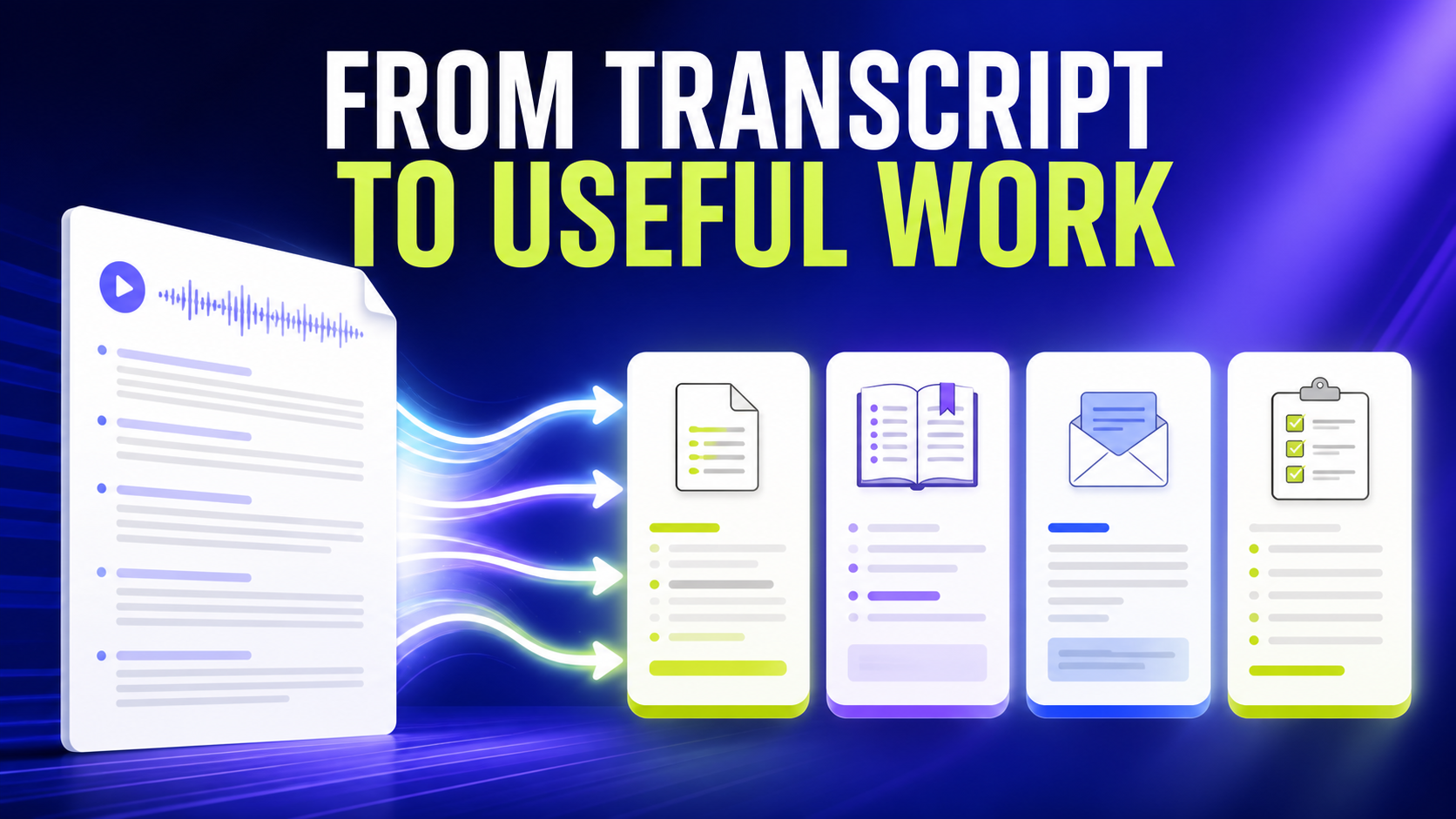
Once the conversation exists as text, AI meeting notes become much more useful. A raw transcript can be thousands of words long, and nobody wants to reread every sentence after every call. An AI meeting summary can condense the discussion into the main ideas while the original transcript remains available for detail.
Action items are another natural use of AI transcription. Meetings rarely present every task neatly at the end. Responsibilities appear throughout the conversation. One person agrees to send a document early in the meeting, another promises to contact a customer twenty minutes later, and a deadline may not be confirmed until just before everyone leaves.
Searching for those commitments manually can take time. A structured action-item output can help bring them together. Instead of treating the transcript as a static record, GG Speech can turn it into information that supports the work following the meeting.
Turn discussion into action
The same meeting transcript can also become an email. After a client call, for example, a freelancer may need to send a concise explanation of what was agreed. Without transcription, that message is reconstructed from memory and rough notes. With the transcript available, the follow-up can be based directly on the conversation.
This creates a much more efficient sequence. The meeting happens once, but the information can be reused several times. The transcript becomes the source for the summary, the action list, the email, the project notes, or another custom AI output. The user does not need to rewrite the same meeting repeatedly in different formats.
AI meeting transcription is useful outside traditional businesses as well. Students working on group projects can preserve planning discussions. Teachers can review recorded explanations. Researchers can work with interviews. Tutors can create session notes. Community organizations and small teams can maintain clearer records without assigning one participant to act as a full-time note taker.
The browser environment makes this particularly practical because so many meetings already happen online. A meeting transcription Chrome extension can remain close to the applications being used before and after the conversation. GG Speech's sidebar and floating panel are designed to reduce the need to constantly jump between a dedicated transcription website and the rest of the browser workflow.
Keep the work connected after the call
That reduction in context switching matters after the call ends. A user may need to move directly from the transcript into Google Docs, an AI tool, email, or project documentation. Keeping speech-to-text close to those applications helps the meeting information become useful immediately rather than becoming another file that will be reviewed “later.”
Of course, meeting transcription should always be used with appropriate respect for consent, privacy, organizational policies, and applicable laws. The convenience of speech-to-text does not remove the responsibility to communicate transparently when conversations are being recorded or transcribed.
Used appropriately, however, AI meeting transcription can solve one of the most frustrating problems in modern work: valuable information disappearing the moment a meeting ends. Instead of leaving with scattered notes and vague memories, people can leave with searchable text that can be transformed into clear documentation.
GG Speech is designed around that practical outcome. The purpose of meeting transcription is not to produce more text. It is to make the conversation easier to remember, easier to search, and easier to turn into the work that needs to happen next.